
Basics · 6 min read
The evolution of vision correction
Why reading glasses are no longer enough.
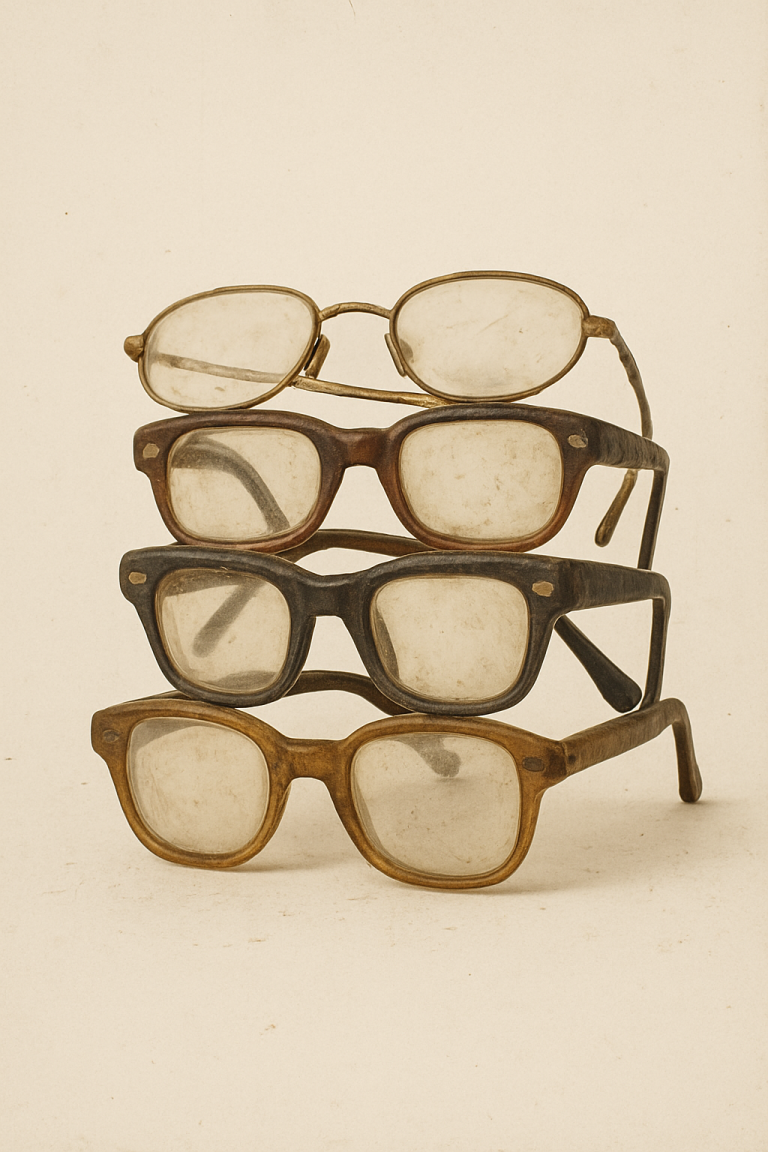
Eyeglasses are one of humanity's oldest inventions. The first recorded pair of spectacles appeared in 1284 in central Italy when glass-blown lenses were set in a leather or wooden frame and held in front of the eyes.
These convex lenses helped far-sighted people read by magnifying nearby objects and for centuries the basic principle has remained the same: a fixed lens in front of the eye bends light so that near objects come into focus. Frames evolved over time-ribbons, temples and hinges were added-but spectacles still rely on static optics first imagined over 700 years ago.
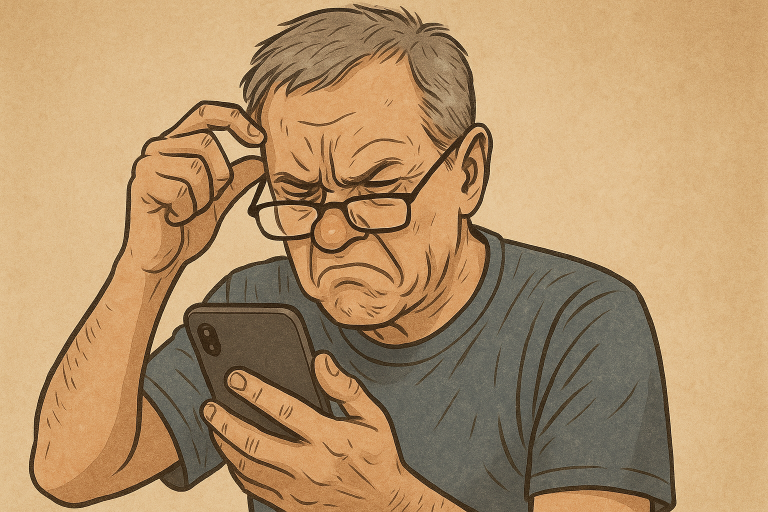
Reading glasses excel at one task: making text or objects at a fixed distance clearer. But our 21st-century lives are dynamic. We switch from phone to laptop to tablet, read notifications while walking down the street, and participate in video calls while cooking. This constant, varied near-vision demand simply did not exist when spectacles were invented.
For the estimated 1.8 billion people worldwide who have presbyopia-the age-related loss of near-focus that typically starts in our 40s-this modern reality can be frustrating and disruptive. Presbyopia occurs when the eye's natural lens becomes less flexible with age, making it difficult to focus on nearby objects. Symptoms may include blurred close-up vision, holding reading material at arm's length, headaches, and eye strain.
Research shows people spend about 4½ hours per day on their phones and pick them up around 60–150 times a day, or roughly every six minutes.Each glance is often accompanied by a squint or a scramble to find reading glasses. Reading glasses have served millions, but they come with limitations:
- Static magnification: They offer no adaptability. You are stuck with a fixed lens power, regardless of lighting conditions or screen distance.
- Constant on-off use: You wear them to read, take them off to walk, switch to prescription glasses to see long distances, and repeat.
- Easy to forget, lose, or break: Reading glasses are fragile and easily misplaced. You have to carry them everywhere or risk being unable to read comfortably.
Check yourself: a quick self-assessment
- Do you find yourself holding your phone or book farther away to read clearly?
- Have you increased the font size on your screen or turned up the brightness?
- Do you experience eye fatigue or headaches during or after reading?
- Are you switching between different pairs of glasses throughout the day?
If you said “yes” to two or more of these, you may be experiencing early signs of presbyopia.
Emerging digital and adaptive solutions
Presbyopia is no longer met solely with a trip to the optician for reading glasses. Today, innovation spans from smart eyewear in development, to brain-training software, to on-demand vision correction embedded in your devices. These solutions aim to keep up with constant screen-switching, where clarity is needed in an instant-without fumbling for a pair of lenses.
01
Autofocus glasses
Finnish start-up IXI is reimagining spectacles with autofocus lenses. Rather than fixed optics, IXI's frames hide tiny sensors that track where you are looking; liquid crystal lenses then adjust the focus to match what you are viewing. While these smart glasses are still in development, they illustrate how adaptive optics can respond to modern multitasking and screen-hopping.
02
Visual-acuity training software
RevitalVision offers a non-invasive, software-based presbyopia program that aims to improve near visual acuity and contrast sensitivity by training the visual cortex. Users complete up to 30 sessions over two months on a computer. The program is personalized and completed at home, offering convenience without surgery or physical devices.
03
Built-in smartphone tools
Modern smartphones include accessibility featuresthat can temporarily bridge the gap when reading glasses are not handy. Apple's Magnifier app can turn an iPhone or iPad into a magnifying glass, with zoom, colour filters, flashlight, brightness, and contrast controls. While not a cure for presbyopia, these features show how devices can adapt to low-vision needs on the fly.
Vision correction, reimagined
Glassless
At Glassless, we are pioneering the world's first vision-correcting software. We compensate for presbyopia exactly where it is most disruptive-in your digital world-in three simple steps.
- 01
Your vision
Enter your prescription or take a quick vision test so we understand how your eyes see.
- 02
Correction filter
Our software models your eye's imperfections and builds a filter to reverse the blur.
- 03
Apply it to your screen
We adjust text, images, and interface elements for your screen type and viewing distance.
Join Glassless' waiting list
Be among the first to experience a smarter, screen-based solution for presbyopia. Early testers get exclusive access to vision tools and updates from our team.
Join now